

The cannabis marketing playbook is being rewritten.
Between advertising restrictions that change overnight, social platforms that shadowban without warning, and consumers who expect more transparency than ever, 2026 feels like a reset year for brands trying to stand out without getting shut down.
What’s working now looks nothing like what worked even two years ago. The operators pulling ahead aren’t the ones with the biggest ad budgets. They’re the ones who understand where consumer behavior is heading and how to build sustainable visibility in a market that punishes shortcuts.
Here are five trends shaping cannabis marketing this year and how smart brands are adapting.
Cannabis as a Wellness Ritual

The 2026 cannabis consumer looks different from previous years. They’re older, more health-conscious, and approaching cannabis the same way they approach supplements, sleep aids, and recovery tools. They want science-backed explanations of effects, clear dosing guidance, and content that frames cannabis within broader wellness routines.
This shift rewards brands that invest in educational content. Strain menus are becoming educational series. Product pages are evolving into detailed guides about sleep support, stress management, pain relief, and recovery protocols. The brands winning attention are the ones treating their content like a resource library rather than a sales catalog.
Generic product descriptions don’t cut it anymore. Consumers research before they buy, and they remember the brands that actually taught them something useful.
Digital-First Shopping and Local SEO
Shopping behavior has fundamentally changed. Consumers now research brands, compare products, and read reviews online before they ever walk into a dispensary or place a pickup order. The discovery process happens on search engines, not foot traffic.
This creates a massive opportunity for operators who invest in SEO-rich content. Blog posts, buying guides, and location-specific pages (think “best dispensary in Denver” or “cannabis delivery in Oakland”) compound over time. Unlike paid advertising, which disappears the moment you stop spending, organic search visibility builds lasting equity.
The math is simple: paid cannabis ads remain restricted and unreliable, while local SEO for dispensaries delivers compounding returns. High-performing operators are treating content as infrastructure, not a nice-to-have.
Social Media Under Restrictions
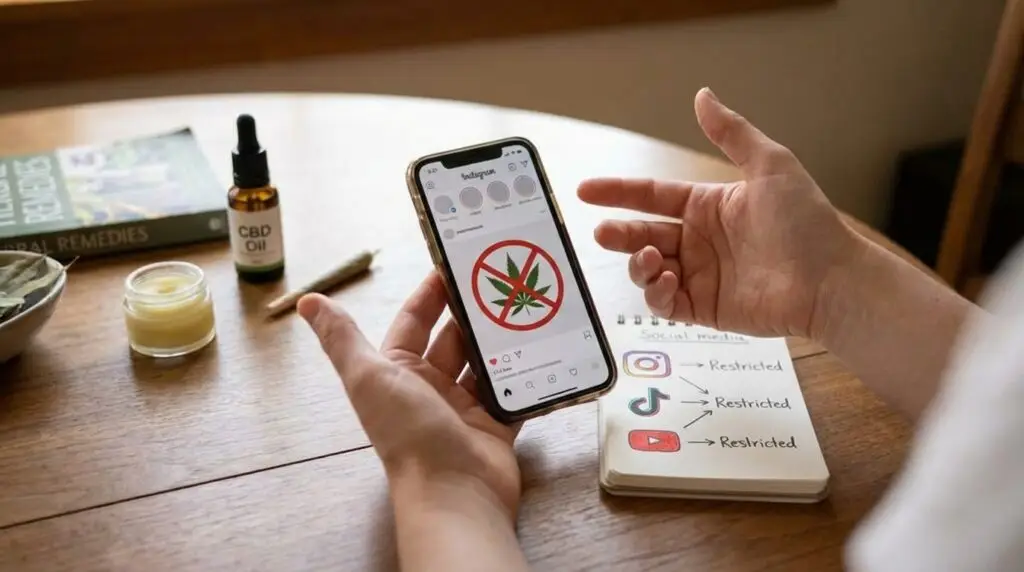
Social platforms remain openly hostile to cannabis advertising, which has pushed brands toward organic content strategies and platform-specific approaches.
What works on Cannabis YouTube (long-form educational content) differs dramatically from what performs on Instagram and TikTok (lifestyle-focused visuals and short-form entertainment).
The brands maintaining visibility are posting consistently (three to seven times per week), leaning into UGC and community content, and building audiences around lifestyle and education rather than direct product promotion. Relatable content outperforms polished marketing. Behind-the-scenes footage beats studio photography. Authenticity wins.
B2C cannabis brands are also learning that platform diversification matters. Relying on any single channel is risky when account suspensions can happen without warning. Smart operators build audiences across multiple platforms while driving traffic back to owned properties like email lists and websites.
Personalization and AI-Powered Marketing
Hyper-personalized marketing has moved from aspirational to expected. Consumers now anticipate tailored product suggestions, behavior-based recommendations, and communication that reflects their purchase history and preferences.
The infrastructure supporting this shift includes loyalty programs, CRM systems, and AI-powered recommendation engines. Cannabis operators are using first-party data (collected directly from customers through purchases, email signups, and loyalty programs) to deliver segmented content and targeted offers.
Email flows triggered by specific behaviors (first purchase, product reorder timing, category exploration) convert better than generic blasts. SMS campaigns with personalized recommendations outperform mass promotions. The brands investing in data infrastructure now will have significant advantages as personalization becomes table stakes.
Experiential Marketing, Ethics, and Founder-Led Brands
As price compression continues across mature markets, brands need differentiation beyond product and price. Experiential marketing (events, pop-ups, educational workshops, consumption lounges) creates emotional connections that transactional interactions can’t match.
Sustainability and transparency have also become non-negotiable for younger consumers. Gen Z and millennial buyers want to know about sourcing, testing protocols, social impact initiatives, and environmental practices. Brands that communicate these values authentically build loyalty that survives price wars.
Founder-led storytelling remains one of the most effective trust-building tools available. Personal narratives, origin stories, and authentic voices cut through marketing noise in ways that corporate messaging cannot. The operators who put real faces and real stories behind their brands create connections that competitors struggle to replicate.
Where to Start
These trends share a common thread: they reward brands that invest in content, visibility, and authentic connection over short-term tactics. The operators pulling ahead are building infrastructure (content libraries, SEO foundations, data systems, community engagement) that compounds over time.
One often-overlooked piece of that infrastructure is directory presence. Many cannabis businesses make common listing mistakes that cost them visibility and credibility with potential customers. Incomplete profiles, inconsistent NAP information, and missing category tags all hurt discoverability in a market where consumers rely heavily on online research.
If your dispensary, brand, or cannabis service isn’t showing up where consumers are searching, you’re leaving money on the table. Getting your business listed on CannaMapr is a straightforward first step toward building the kind of digital presence these 2026 trends demand.
Leave a Reply